SIEM (Security Information and Event Management) solutions are software platforms designed to improve the security posture of an organization by providing real-time analysis of security alerts generated by applications and network hardware.
The primary goal of SIEM is to provide a centralized view of an IT environment and the security risks it faces, through the collection, analysis, and correlation of logs and data from various sources. SIEM systems are vital in detecting, preventing, and responding to security threats and incidents.
Organizations face an increasing number of cyber threats, making it essential to have real-time visibility into security events. SIEM tools help by consolidating security data from multiple sources, enabling security teams to detect and respond to threats more efficiently.
One key reason for using SIEM tools is their ability to detect threats that would otherwise go unnoticed. Traditional security tools generate vast amounts of logs, but without correlation and analysis, important security events can be overlooked. SIEM solutions aggregate and analyze this data, helping identify patterns indicative of attacks.
Additionally, SIEM tools improve incident response by providing automated alerts and response mechanisms. This reduces the time required to detect and mitigate threats, minimizing potential damage. They also aid in compliance by generating reports for regulatory frameworks such as GDPR, HIPAA, and PCI DSS, ensuring organizations meet security and audit requirements.
SIEM tools typically offer the following features:
Here are some examples of popular SIEM solutions.

Splunk Enterprise Security (ES) is a SIEM platform that focuses on enhancing operational efficiency in security operations centers. It can handle large volumes of data, ensuring visibility across an organization’s digital environment. The platform integrates AI capabilities for dynamic data processing, supporting precise threat detection with contextual insights.
Features of Splunk Enterprise Security:
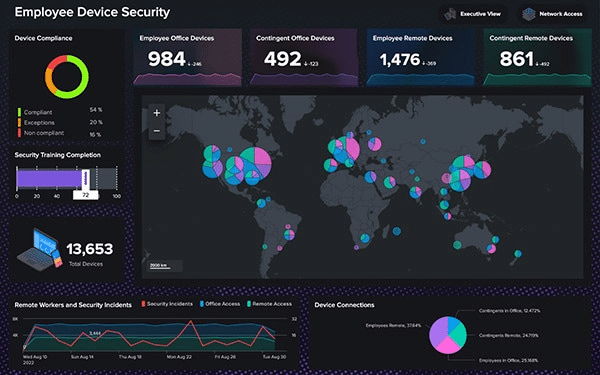
Source: Splunk

LogRhythm SIEM is a self-hosted platform designed for quick detection and remediation of security incidents, offering a lower total cost of ownership. It integrates specialized modules, dashboards, and rules that streamline the operational workflow. This SIEM solution aims to help security teams quickly identify and mitigate cyber threats.
Features of LogRhythm SIEM:
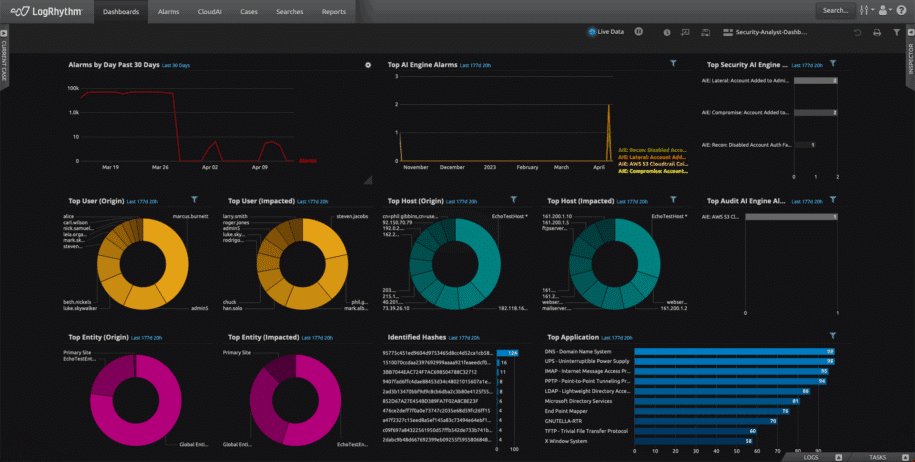
Source: LogRythm

IBM Security QRadar SIEM is designed to enhance the capabilities of Security Operations Center (SOC) analysts using advanced automation and threat intelligence. This system focuses on accelerating the detection, investigation, and response times to cyberthreats. It integrates multiple layers of AI to assist in alert enrichment, threat prioritization, and incident correlation.
Features of IBM Security QRadar SIEM:
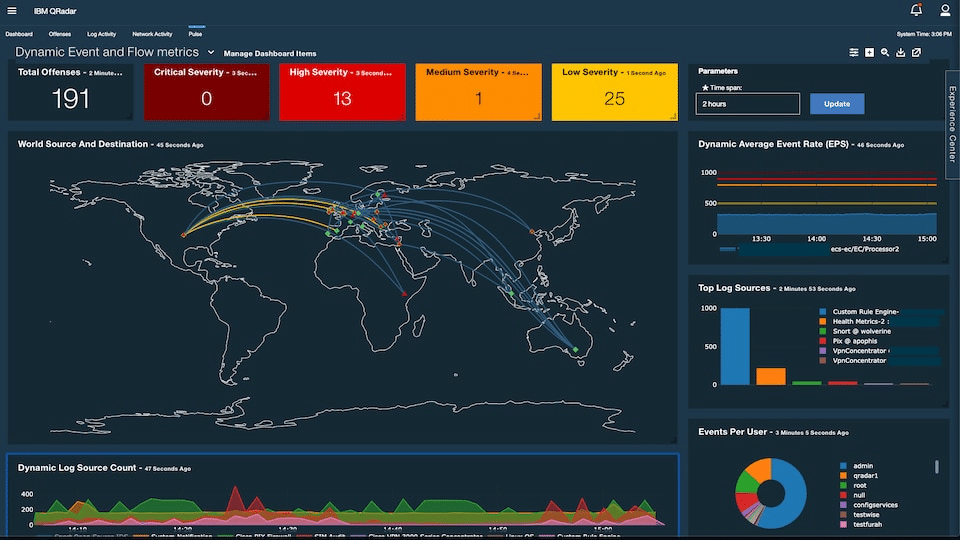
Source: IBM
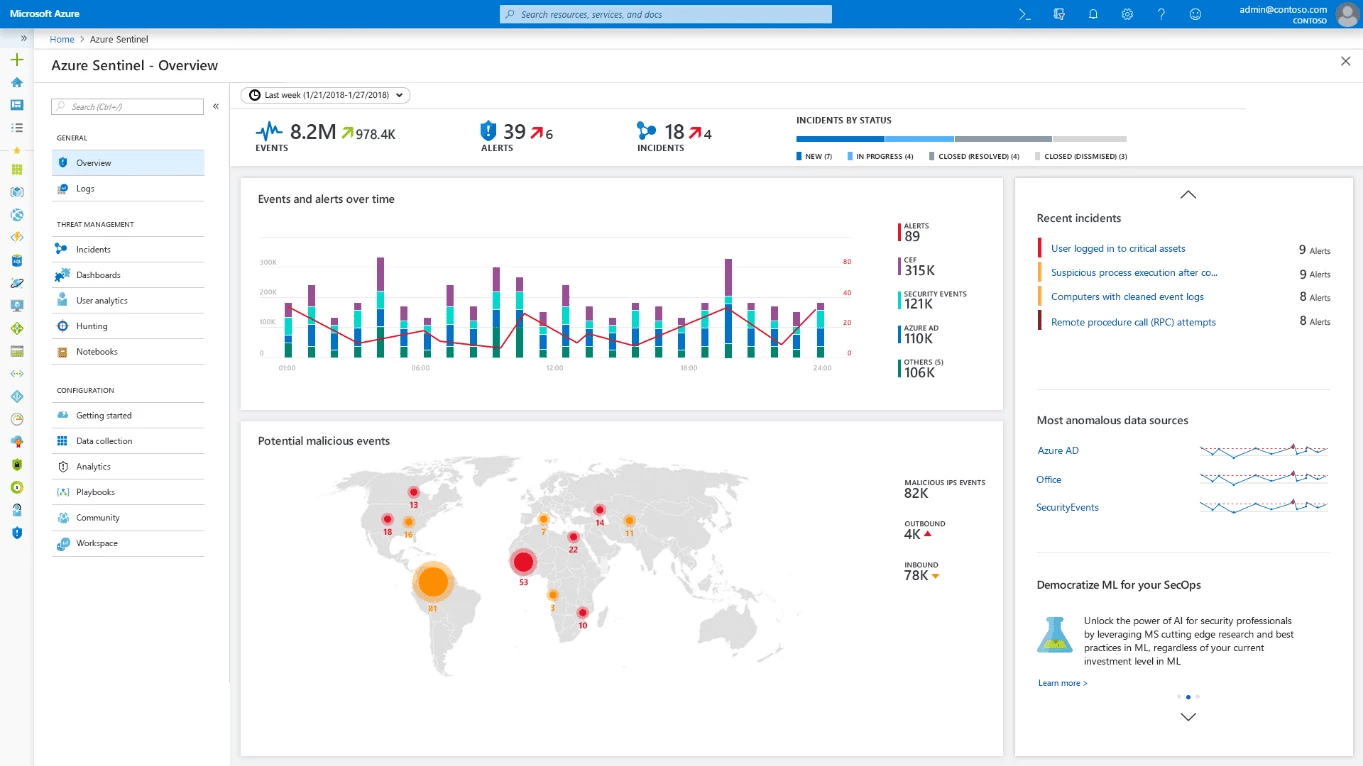
Microsoft Sentinel (formerly Azure Sentinel) is a cloud-native SIEM solution designed to simplify security operations through intelligent security analytics and AI-powered threat detection. It supports SOCs by providing tools for proactive threat detection, investigation, and response.
Features of Microsoft Azure Sentinel:
Source: Microsoft

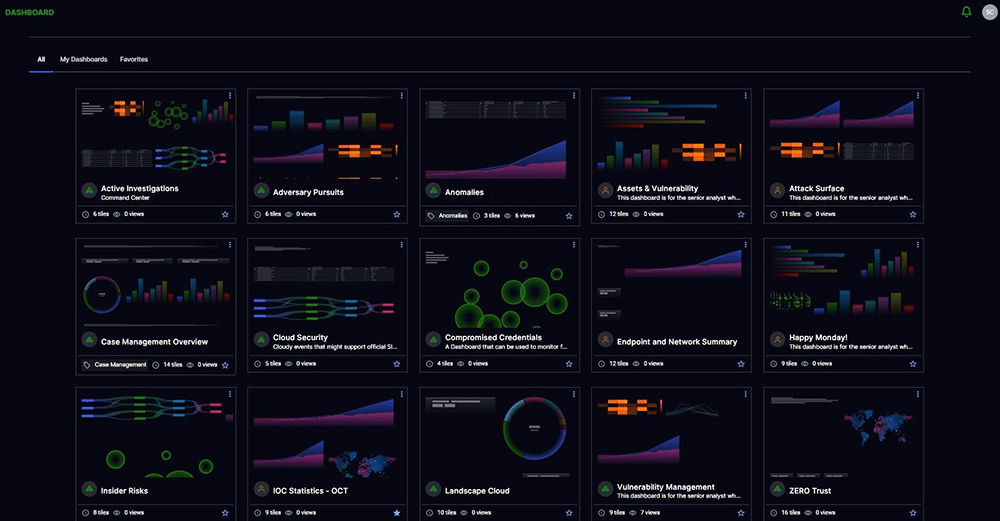
Exabeam Fusion offers New-Scale SIEM™, an advanced cloud-native platform that integrates capabilities for security log management, behavioral analytics, and automated threat detection, investigation, and response (TDIR). This platform is designed to streamline the workflows of security analysts by automating many manual tasks.
Features of Exabeam Fusion:
Source: Exabeam

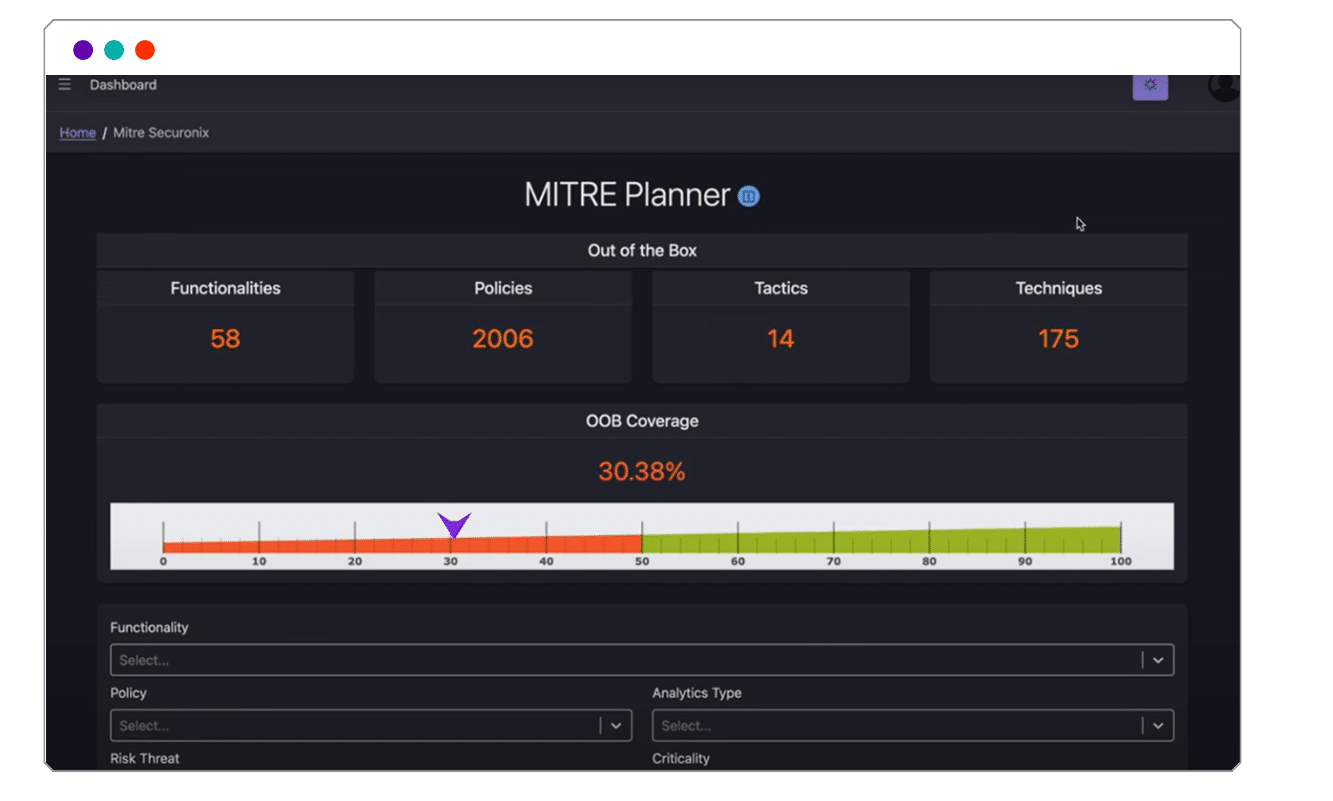
Securonix Unified Defense SIEM combines threat detection, investigation, and response (TDIR). Built on the scalable Snowflake Data Cloud, this SIEM solution is intended for modern enterprises facing large data challenges, providing an architecture designed to enhance threat defense capabilities.
Features of Securonix Unified Defense SIEM:
Source: Securonix

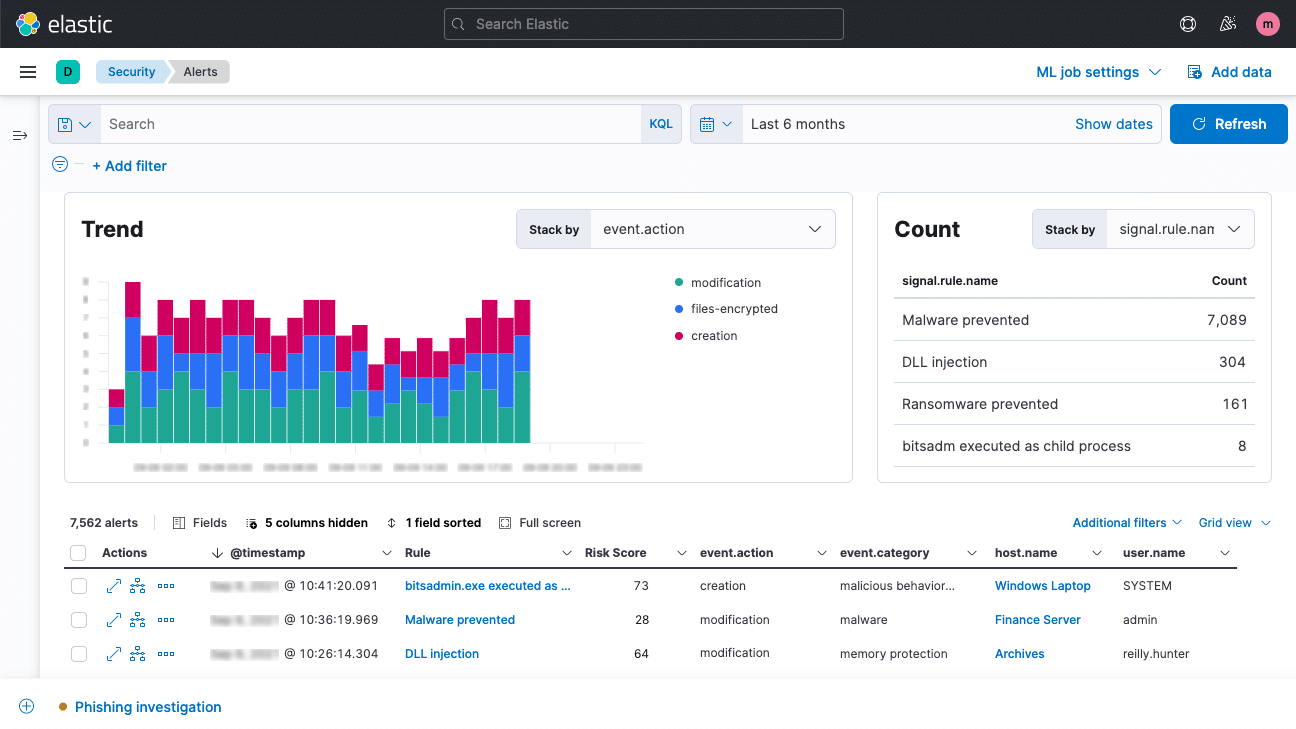
Elastic Security SIEM focuses on threat detection, investigation, and response by leveraging AI-driven security analytics on its Search AI platform. This approach enables a comprehensive understanding of security threats and faster response times. Elastic Security’s SIEM system optimizes core SOC workflows through generative AI and machine learning.
Features of Elastic Security SIEM:
Source: Elastic

OpenText ArcSight Enterprise Security Manager (ESM) is designed for real-time threat detection and response. It combines comprehensive data collection, real-time analysis, and a native SOAR capability, underpinned by a correlation engine. It allows rapid identification and triage of cyber threats, reducing the time from detection to response.
Features of OpenText ArcSight Enterprise Security Manager:
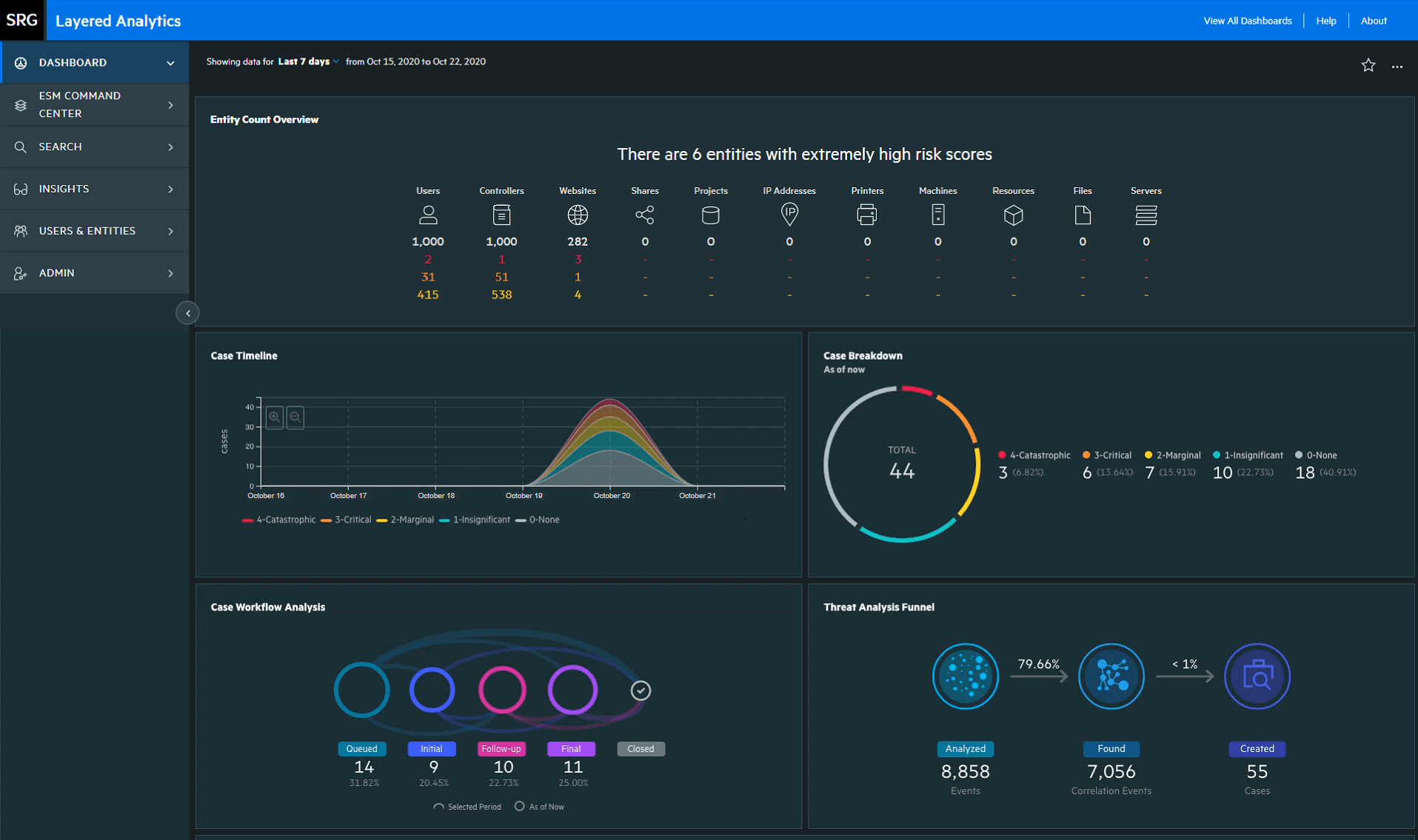
Source: OpenText

Sumo Logic Cloud SIEM is designed to provide security analysts and SOC managers with enhanced visibility and streamlined workflows for rapid threat detection and response. It leverages analytics and features to improve the understanding of the scope and context of cyber threats, helping teams to manage and mitigate them.
Features of Sumo Logic Cloud SIEM:
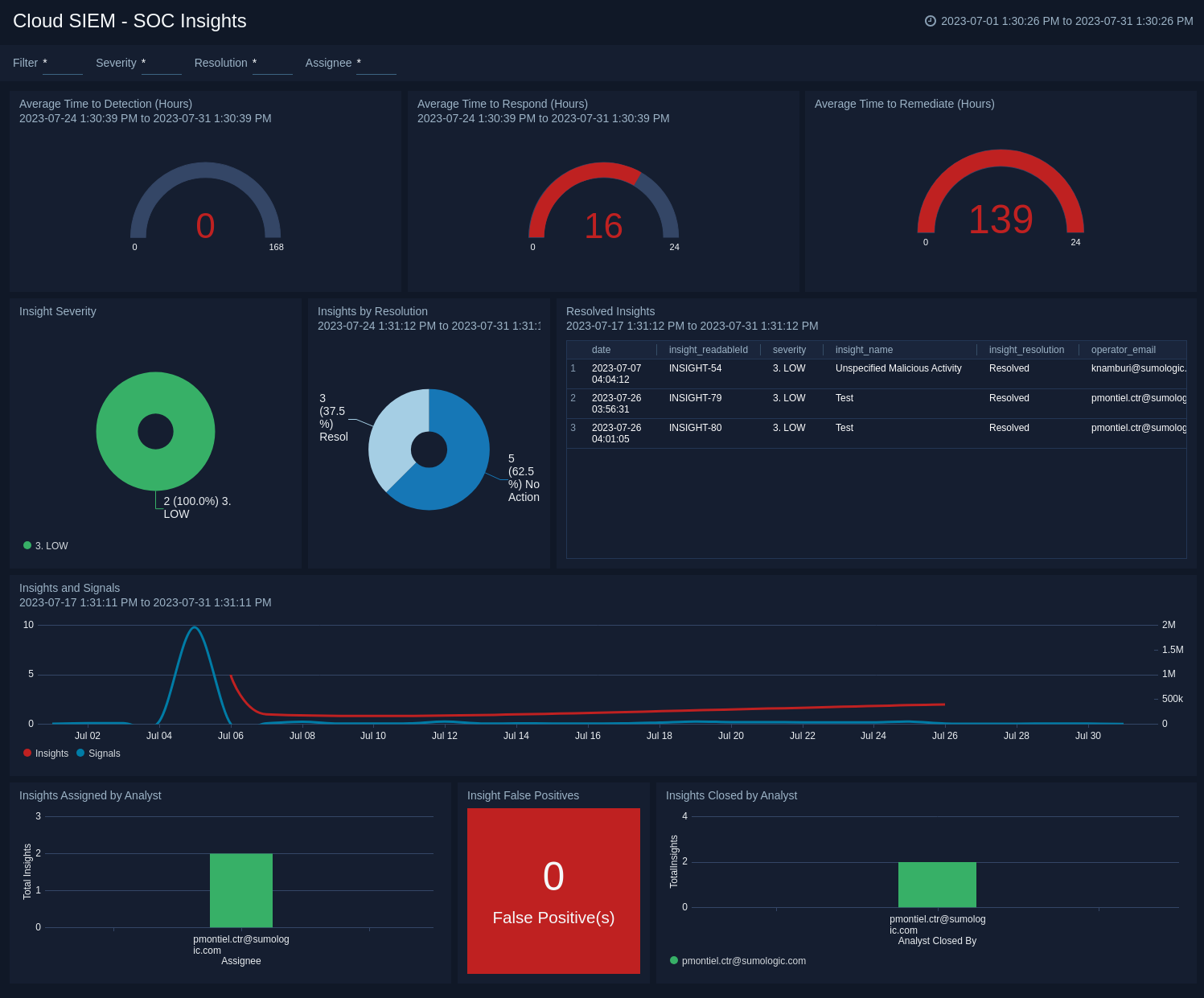
Source: Sumo Logic
InsightIDR from Rapid7 is a SIEM solution designed for the cloud-first era, focusing on scalability, speed, and security coverage for hybrid environments. It supports digital transformation, SaaS adoption, and agile development through cloud-native capabilities.
Features of InsightIDR:
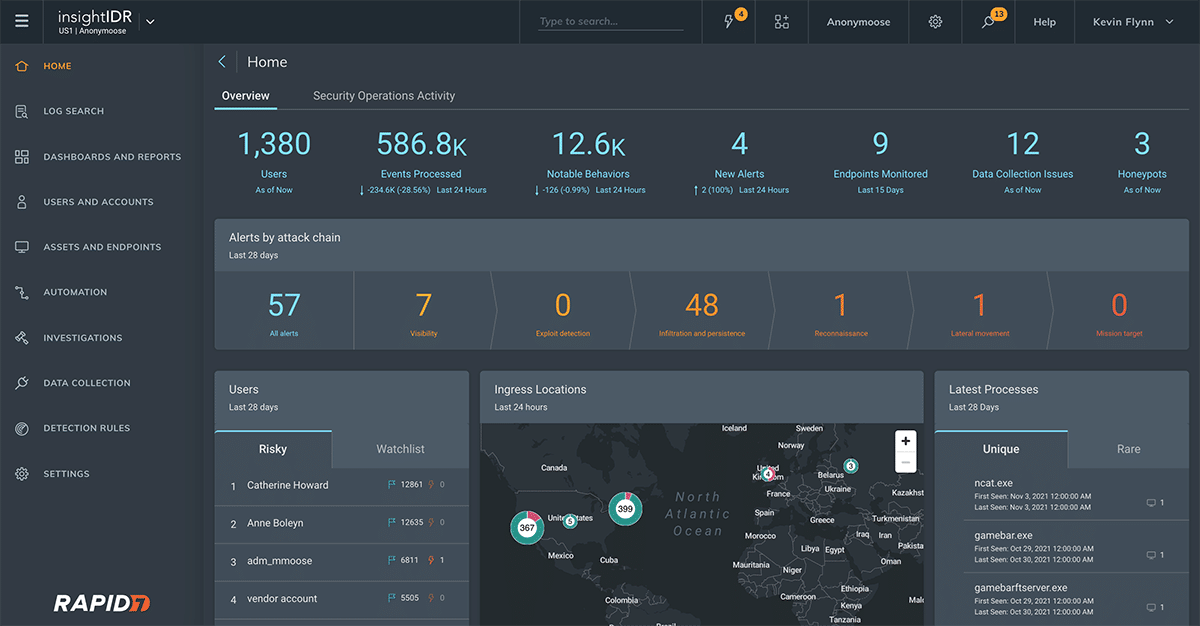
Source: Rapid7
Selecting the right SIEM provider requires evaluating multiple factors to ensure the solution aligns with your organization’s security needs, infrastructure, and compliance requirements. Below are key considerations to help guide the decision-making process:
Security Information and Event Management (SIEM) and Extended Detection and Response (XDR) solutions can work together to provide comprehensive cybersecurity protection. SIEM offers broad visibility into an organization’s IT environment by collecting and analyzing security data from various sources. XDR extends this by integrating endpoint, network, email, and cloud security, providing deeper insights and enabling faster detection and response. Together, SIEM and XDR solutions can enhance incident detection and response capabilities by offering layered security across multiple threat vectors.
Combining SIEM with XDR helps security teams correlate data from disparate systems, uncovering patterns that might otherwise go unnoticed. While SIEM focuses on aggregating logs and providing a high-level overview of the security posture, XDR automates response workflows to streamline threat mitigation. Organizations can benefit from a more efficient incident response process by harnessing the strengths of both tools, reducing the mean time to detect and respond to emerging threats, and improving overall security resilience.
Cynet provides the world’s first Autonomous Breach Protection platform that natively integrates endpoint, network and user attack prevention/detection of XDR with log management and analysis of CLM and automated investigation and remediation capabilities of SOAR, backed by a 24/7 world-class MDR service.
End to end, fully automated breach protection is now within reach of any organization, regardless of security team size and skill level. Most smaller businesses find that Centralized Log Management (CLM) is fully sufficient for their needs while far more affordable and usable than SIEM solutions.
Cynet can be deployed across thousands of endpoints in less than two hours. It can be immediately used to uncover advanced threats and then perform automatic or manual remediation, disrupt malicious activity and minimize damage caused by attacks.
Get a free trial of Cynet and experience the world’s only integrated XDR, CLM, SOAR and MDR solution.



Search results for: